Husky barking / Updated
Why your Husky talks, howls and barks, and what actually helps
A plan for a dog that sings, so the whole street does not have to listen.
 By Michael Northcutt, PhD · Last updated November 26, 2026January 2027 series ·
We read VCA, Dogster, the AKC, the ASPCA and PetMD for this guide. General education only, not veterinary advice.
Quick answer: Huskies howl, talk and bark. Give intense daily exercise, teach a Quiet cue, build time alone slowly, and reward the pause. You can set limits, but not remove the instinct.
Key takeaways
- VCA rates Husky barking as high. Dogster says many prefer howling.
- Exercise and mental work are the first fix. VCA says problems can develop rapidly.
- Teach Quiet and reward the pause. Skip collars and punishment.
Your Husky does not just bark. It talks back, sings along with sirens, and howls the second you grab your keys.
You love the personality. You also lie awake wondering what the neighbors think.
VCA says behavioral problems in this breed can develop rapidly without enough activity. So an early plan helps.
What can you do in the next minute?
Stay calm, wait for a pause in the howl, and reward it. Do not yell. Your dog may think you are joining the song.
Do this now
- Speak low. The AKC says that yelling sounds like you are barking too.
- Move your dog away from the window or the sound.
- Wait for a pause. Give a treat the moment it comes.
- Skip the fuss while the howling goes on.
Is my Husky barking or howling?
Dogster says Huskies bark less than some breeds and often prefer howling or whining. A howl is louder and travels farther.
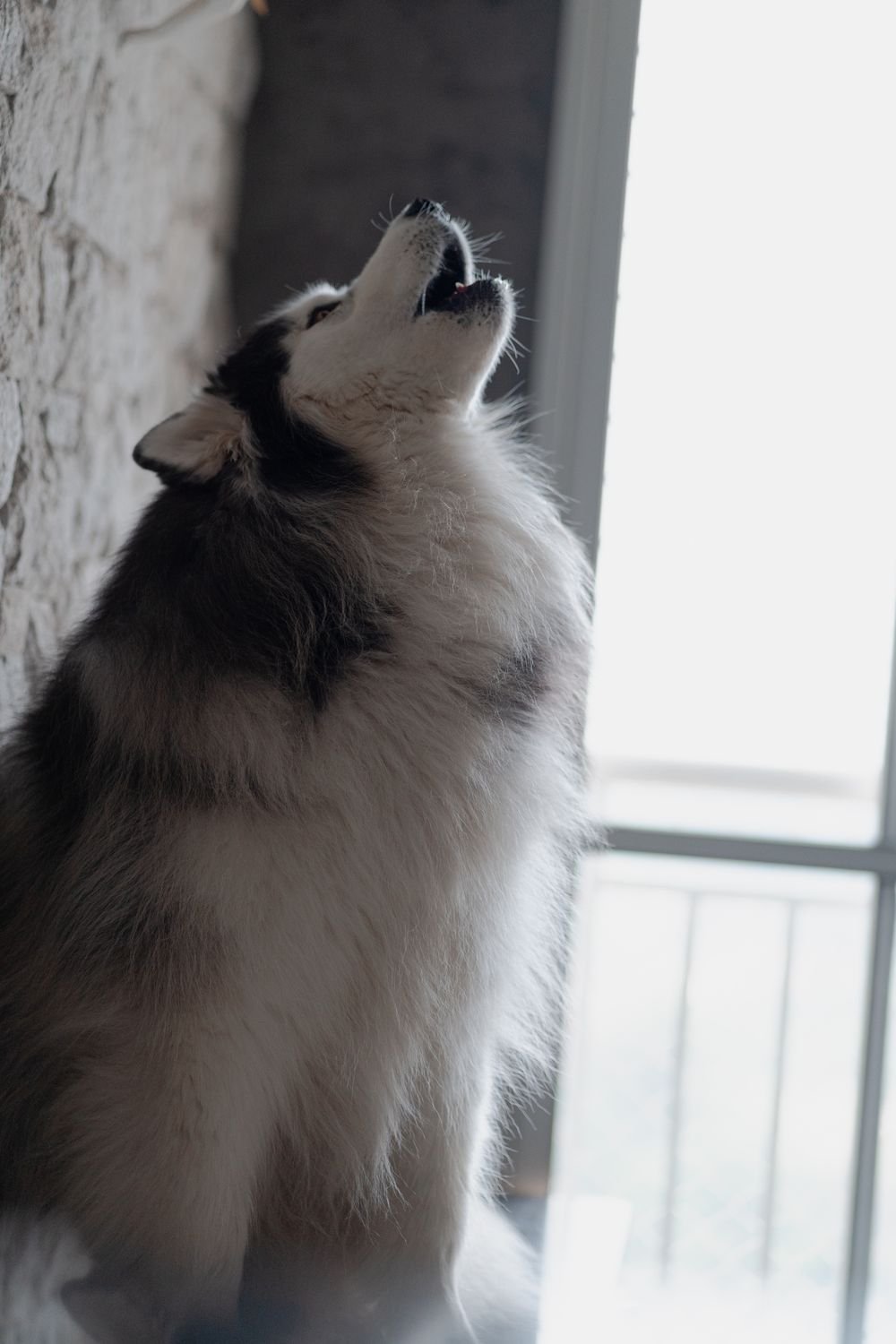
Dogster says Huskies tend to bark less than some other breeds and often prefer whining or howling. It adds that howling is louder and travels farther, and links it to long distance communication.
So the noise carries to your neighbors even when it is not a bark.
| What you hear | Your first move |
|---|---|
| Long howl when you leave | Loneliness or boredom. Exercise first, then build time alone. |
| Howl when a siren passes | Common and short. It usually stops when the sound stops. |
| Talking back, woo woo sounds | Chat. Reward quiet, then enjoy it on cue. |
| Barking at the door or window | Alert barking. Block the view, teach a mat. |
| Noise and chewing when alone | Not enough stimulation. Add exercise and a puzzle. |
Why does my Husky howl when left alone?
VCA says Huskies have limited tolerance for time alone, are prone to boredom and prefer companionship. Loneliness and boredom drive the howl.
VCA lists limited tolerance for time alone and a tendency toward boredom and escape. It says the breed prefers companionship over solitude. It adds that without enough stimulation they may become destructive, vocal, or seek escape.
If the howling comes with panic, ask your vet or a certified trainer. PetMD lists separation anxiety as a cause of barking.
How much exercise does a Husky need to settle?
VCA says Huskies need intense daily exercise and mental stimulation. A tired Husky howls less.
VCA calls for intense daily exercise and mental stimulation such as running, hiking, pulling and structured training. It adds that a Husky needs secure fencing and supervision.
Do the big session before you leave. Add a puzzle feeder for the quiet part of the day. That tip is our own advice.
Can you teach a Husky Quiet?
Yes. Dogster says you cannot remove the howling instinct, but you can teach limits. Use a Quiet cue and reward the pause.
See the quiet-cue exercise for practice while the room is calm.
Dogster says to use a consistent quiet cue, wait for a pause, and reward the moment the howling stops. It also suggests pairing Quiet with a Speak cue, so the howling happens only on request.
The ASPCA agrees on the method. Say Quiet, then feed a steady stream of pea-sized treats. VCA calls the breed independent and strong willed, so keep sessions short and fun.
What about the neighbors and bark collars?
Talk to neighbors early, and skip collars. PetMD advises against anti bark devices and says never to punish barking.
Tell your neighbors you are working on it. Share the plan. It lowers the tension. PetMD says you should never punish a dog for barking or rely on a device.
A collar does not meet the need that causes the howl. Exercise and company do.
What if my Husky howls at night?
Give a long evening run, then a calm routine. Call your vet if the howling is new or sudden.
Spend the energy before bed with a hard run or a long walk. Then keep the lights low.
Keep the sleeping spot close to you for a while. Reward quiet at bedtime.
A new, sudden change in howling is worth a call to your vet.
This is our own advice, not a source finding.
What is the step by step plan?
Exercise first, teach Quiet, build time alone slowly, and reward calm. Keep every session short.
- Exercise first. Run or hike before you leave.
- Teach Quiet. Cue it, wait, reward.
- Ignore attention howls. The AKC says to turn your back or walk away. Reward the pause.
- Build alone time. Start with seconds behind a door, then add time.
Wondering if a bark device could suit your Husky?
Check the boxes that match your dog and write down one thing to try. You get a free one-page printable PDF. Enter your email to get it.
What if your Husky is a puppy?
Start now. VCA says structured training matters for this breed. Early habits are easier to build than to undo.
VCA lists running, hiking, pulling activities and structured training for the breed. For a puppy, begin with short, safe sessions and calm practice. Reward quiet from the first week.
Got a Husky puppy and a noisy household?
The Puppy Protocol is a digital download with situation cards, short reward-based lessons, worksheets and a four-week household roadmap. It does not promise your puppy will stop barking.
How long until it gets better?
No source gives one date. Plan for weeks of steady practice, not days. Count loud episodes to see the trend.
This is our own advice. A small drop each week is a win. If nothing changes after a few weeks, ask a certified trainer.
Should you use an anti bark device?
Not first. PetMD advises against anti bark devices. Exercise and structure matter far more for a Husky.
We never suggest punishment. Our review explains what a handheld unit is and who should skip it.
Wondering about a handheld device?
Our review explains how an ultrasonic unit works, who should skip it, and what to try first.
Quick answers
Do Huskies bark a lot?
VCA rates Husky barking as high. Dogster says many Huskies prefer howling or whining to barking.
Why does my Husky howl?
Dogster links howling to long distance communication and social bonding. Boredom and loneliness can add to it.
Can I train a Husky to stop howling?
Dogster says you cannot remove the instinct, but you can teach limits. Use a Quiet cue and reward the pause.
Do anti bark collars work on Huskies?
PetMD advises against anti bark devices. A strong willed Husky needs exercise and structure far more than a collar.
Sources
- VCA: Siberian Husky. Barking level, time alone, exercise and training.
- Dogster: Do Siberian Huskies Bark a Lot?. Howling versus barking and the Quiet cue.
- AKC: Understanding and Managing Excessive Barking in Dogs. Attention barking and yelling.
- ASPCA: Barking. Quiet cue training.
- PetMD: How To Stop a Dog From Barking. Medical causes, punishment, devices.
About the author
Michael Northcutt, PhD
Founder, PawsPurrfection.com · Certified Pet Therapy Specialist · Certified Companion Animal Rehabilitation Therapist (CCAT) · Member, AAPT Certification Board
Dr. Michael Northcutt is a pet therapy and companion-animal rehabilitation professional with 14 years of experience. His work covers animal-assisted interventions, rehabilitation, animal welfare and the human-animal bond.
He holds the CCAT credential from North Carolina State University College of Veterinary Medicine. He also serves on the Animal Assisted Play Therapy® (AAPT) Certification Board. He was a keynote speaker at the 2017 International Veterinary Symposium Conference.
His core principle: what we do for an animal should support its health, comfort, safety and quality of life. Not a veterinarian.
Disclaimer: This page is general education, not veterinary advice. Call your vet about any sudden or worrying change in your dog.